AECC-IPA policy event: Robust Pollutant Emissions Standards for a Competitive Industry – Advancing Emissions Controls Across Road, Non-Road and Stationary Applications
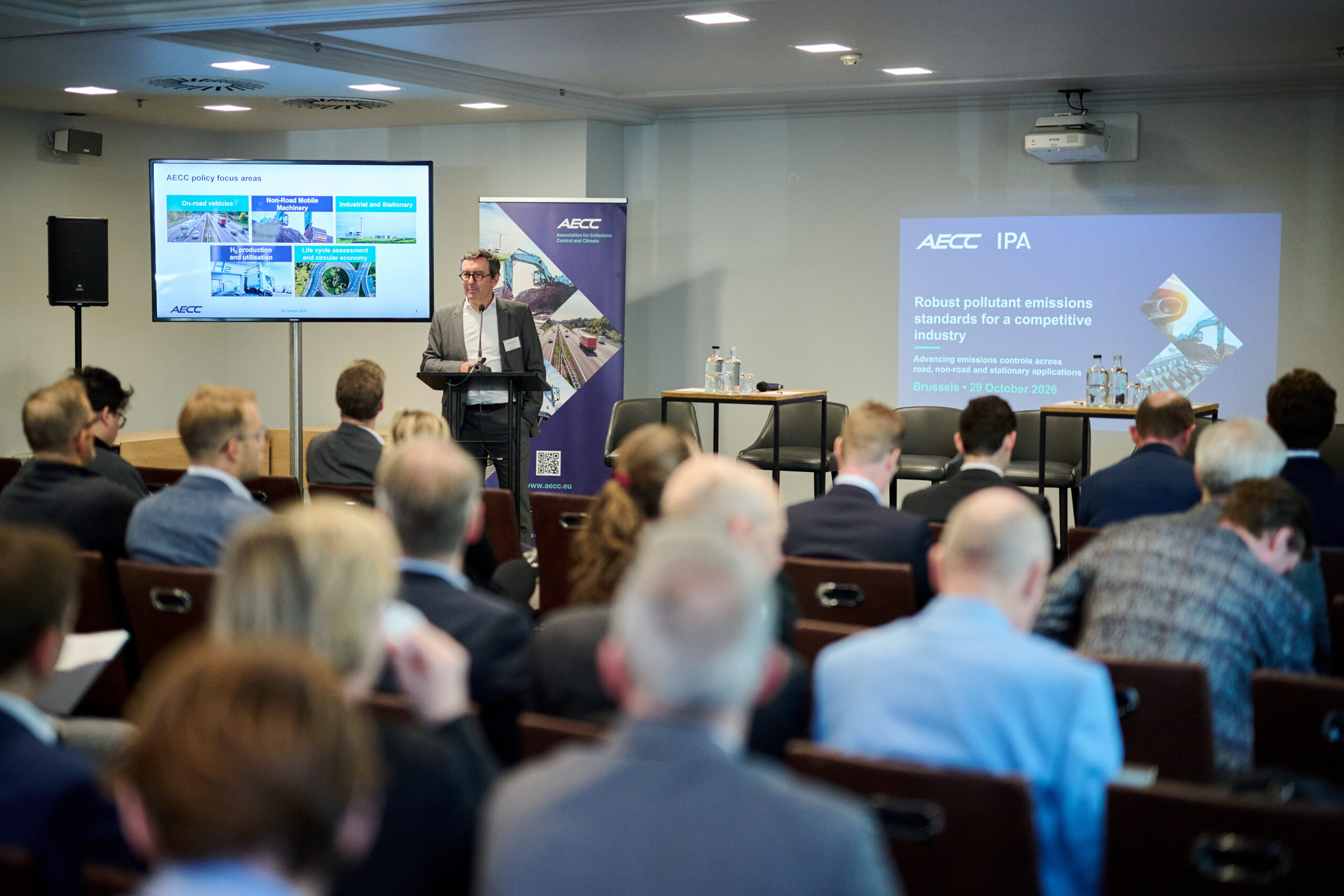
On 29 November 2026, AECC, together with the International Platinum Group Metals Association (IPA), hosted a policy event in Brussels bringing together representatives from the European institutions, Member States, industry, academia, and civil society to discuss the role of emission control technologies in supporting cleaner air and Europe's industrial transition. It was held at the Renaissance Hotel in the heart of the European Quartier, close to the European Parliament.
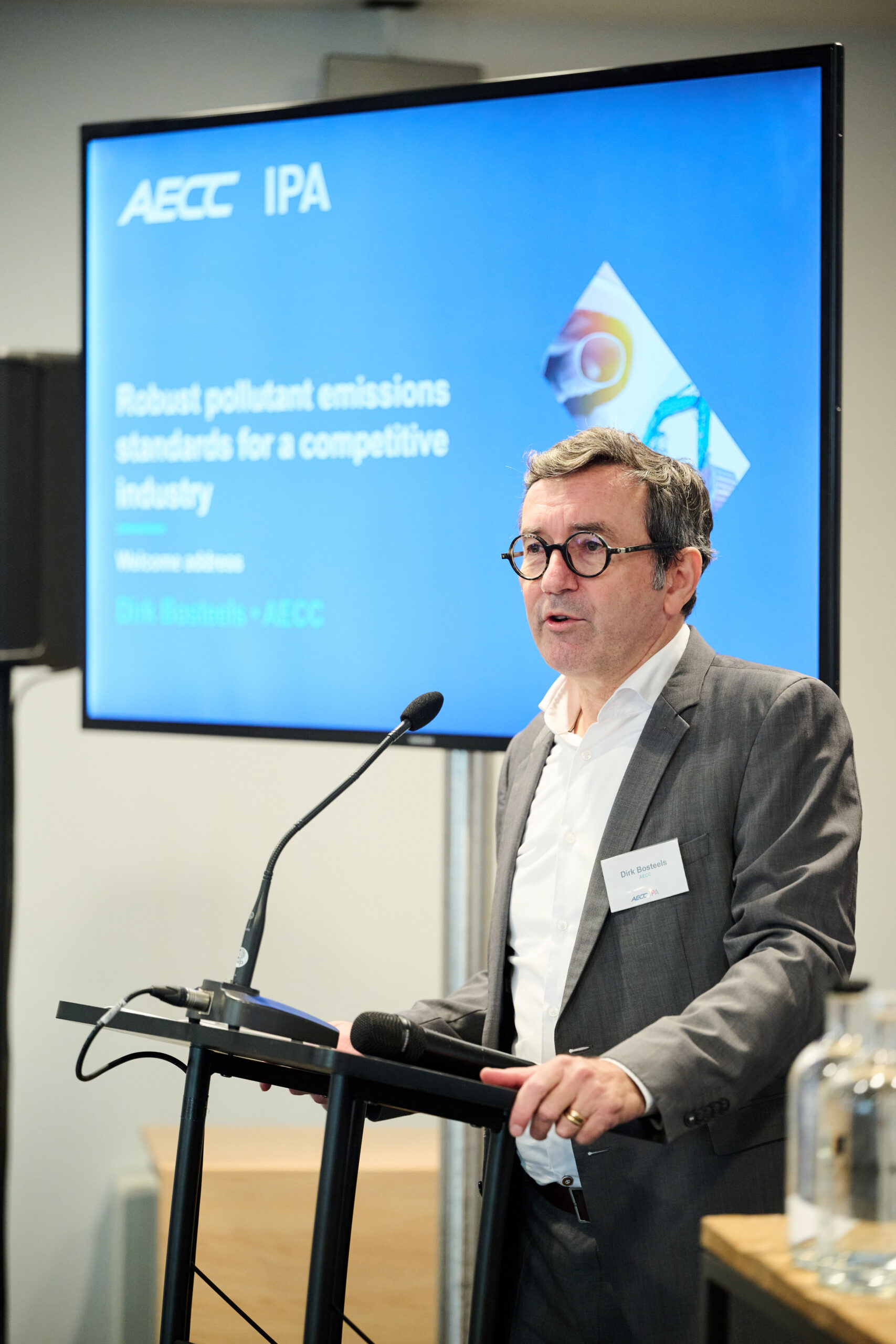
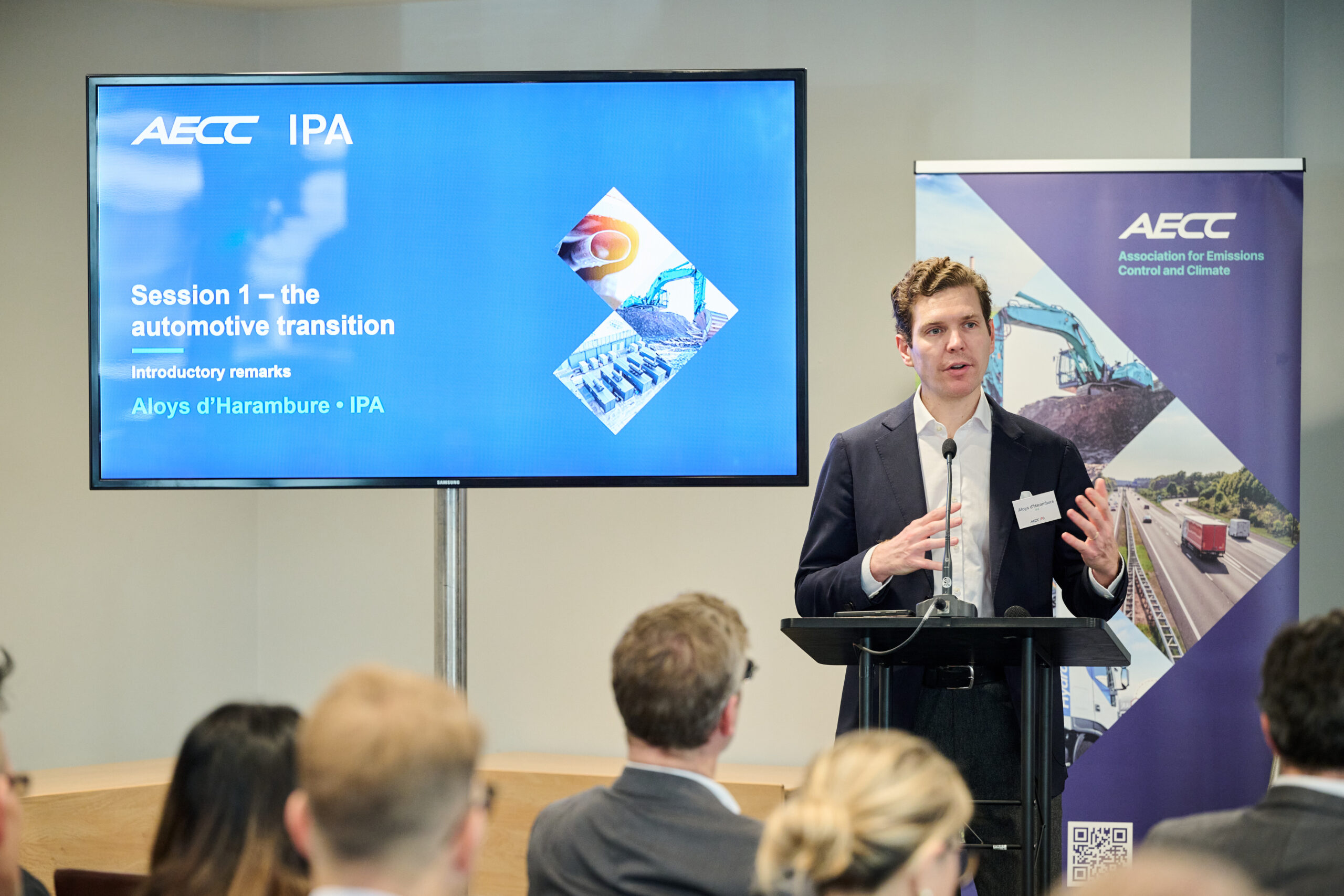
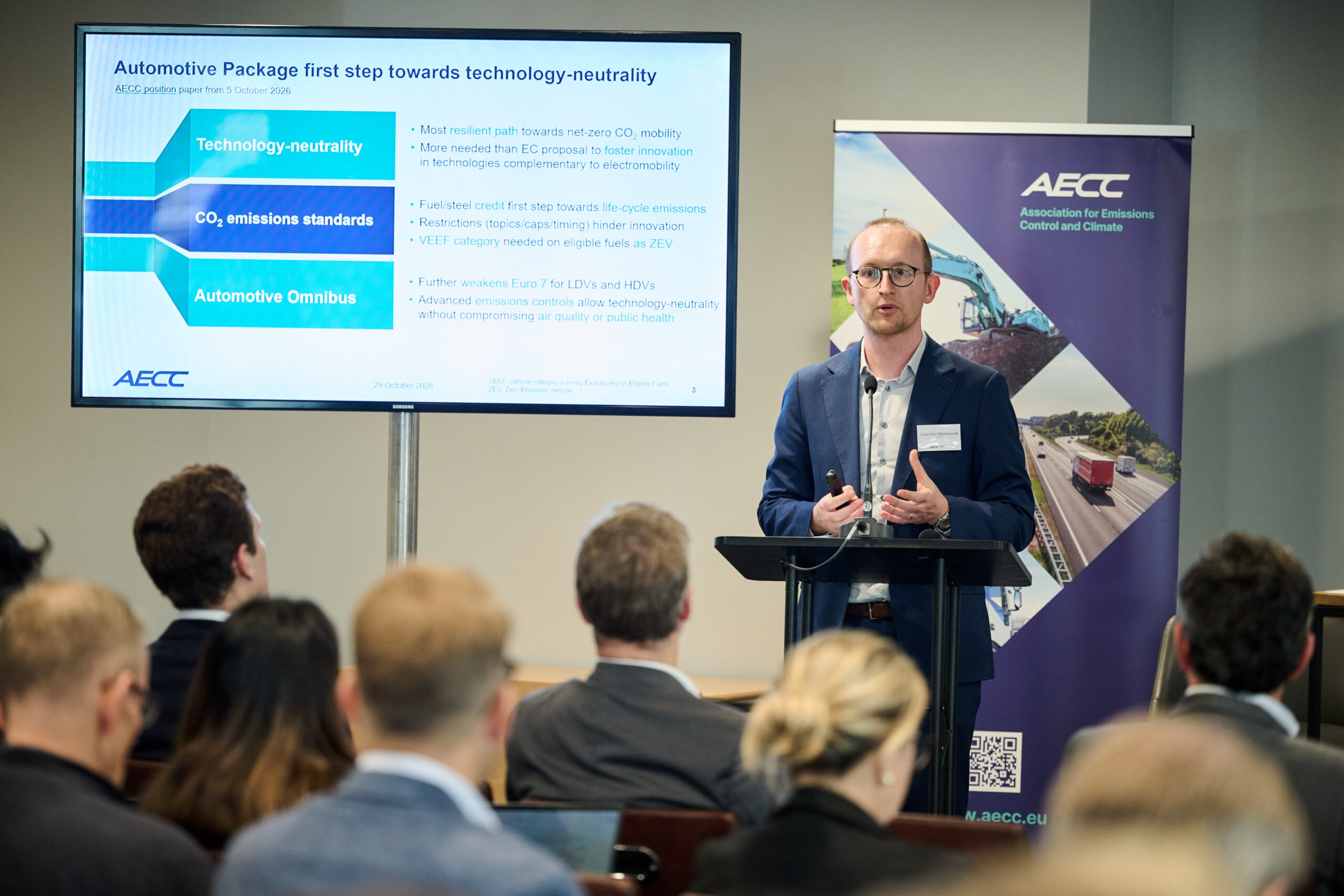
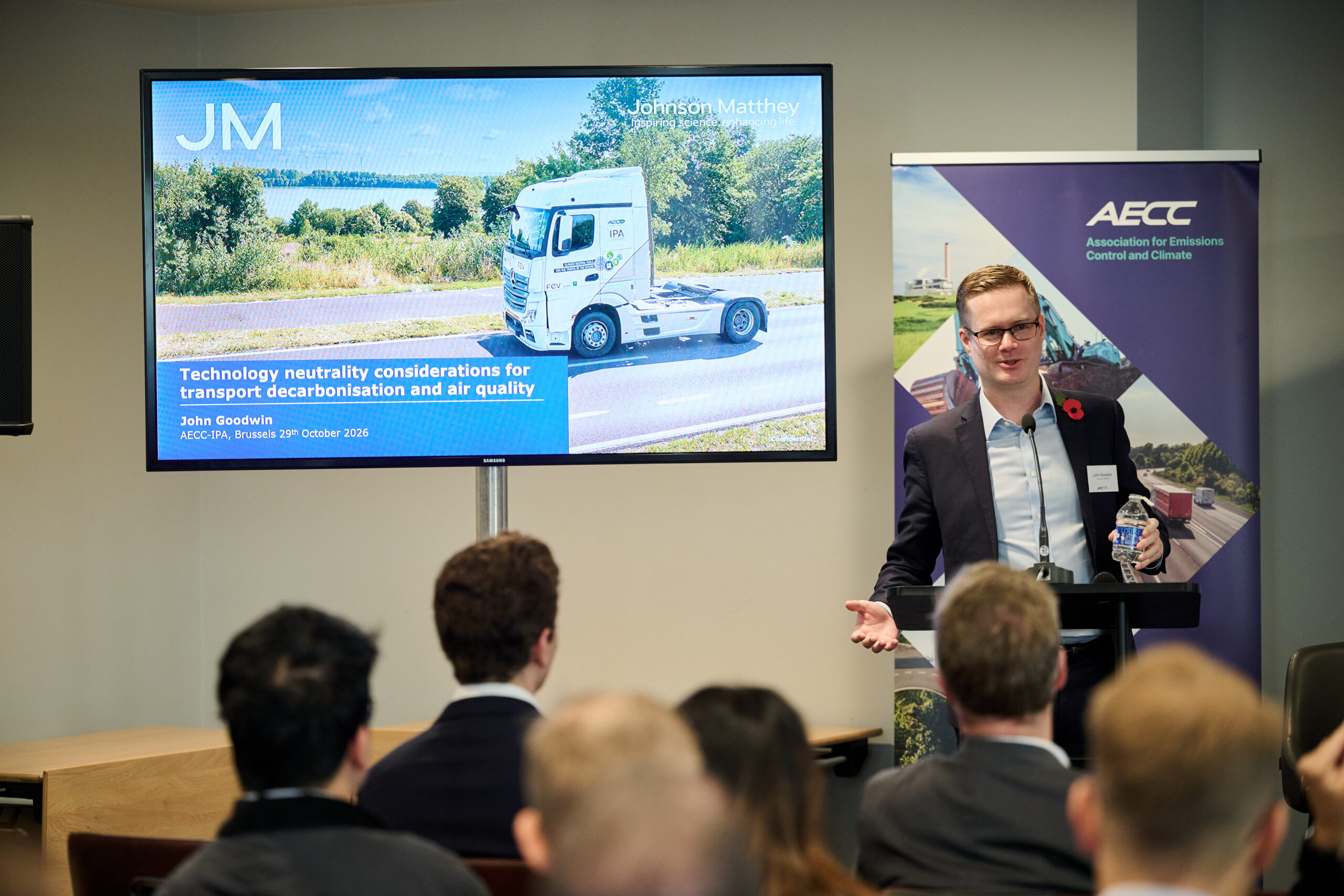
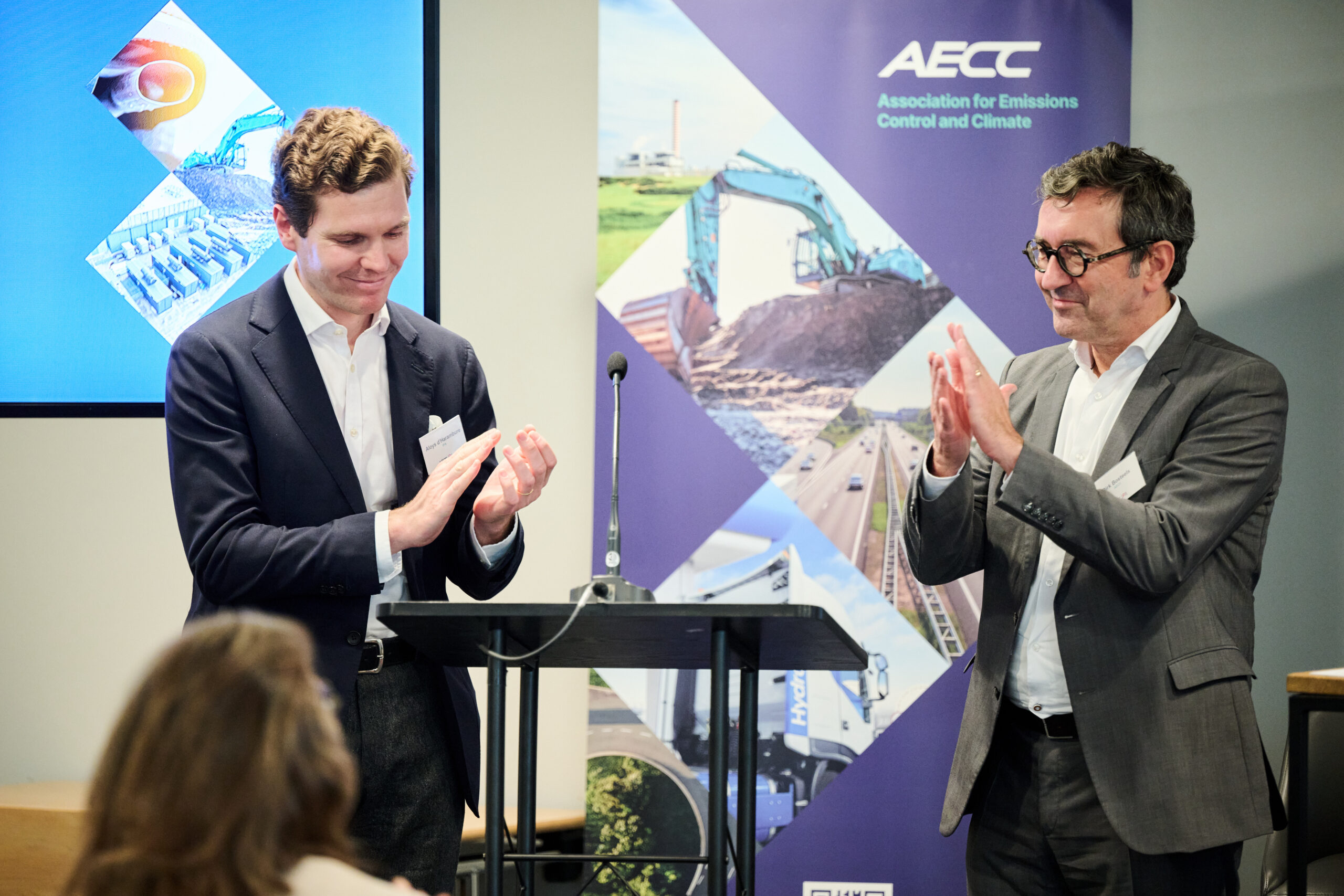
Following introductory remarks by Dirk Bosteels (AECC) and Aloys d'Harambure (IPA), Joachim Demuynck (AECC) presented the risks of the Automotive Omnibus for heavy-duty vehicle competitiveness and addressed persisting myths surrounding the proposal to introduce Vehicles running Exclusively on Eligibly Fuels (VEEF) as ZEV. In his keynote, John Goodwin (Johnson Matthey) highlighted performance of available emission control technologies, enabling technology-neutrality in the review of CO2 emissions standards without compromising air quality and public health.
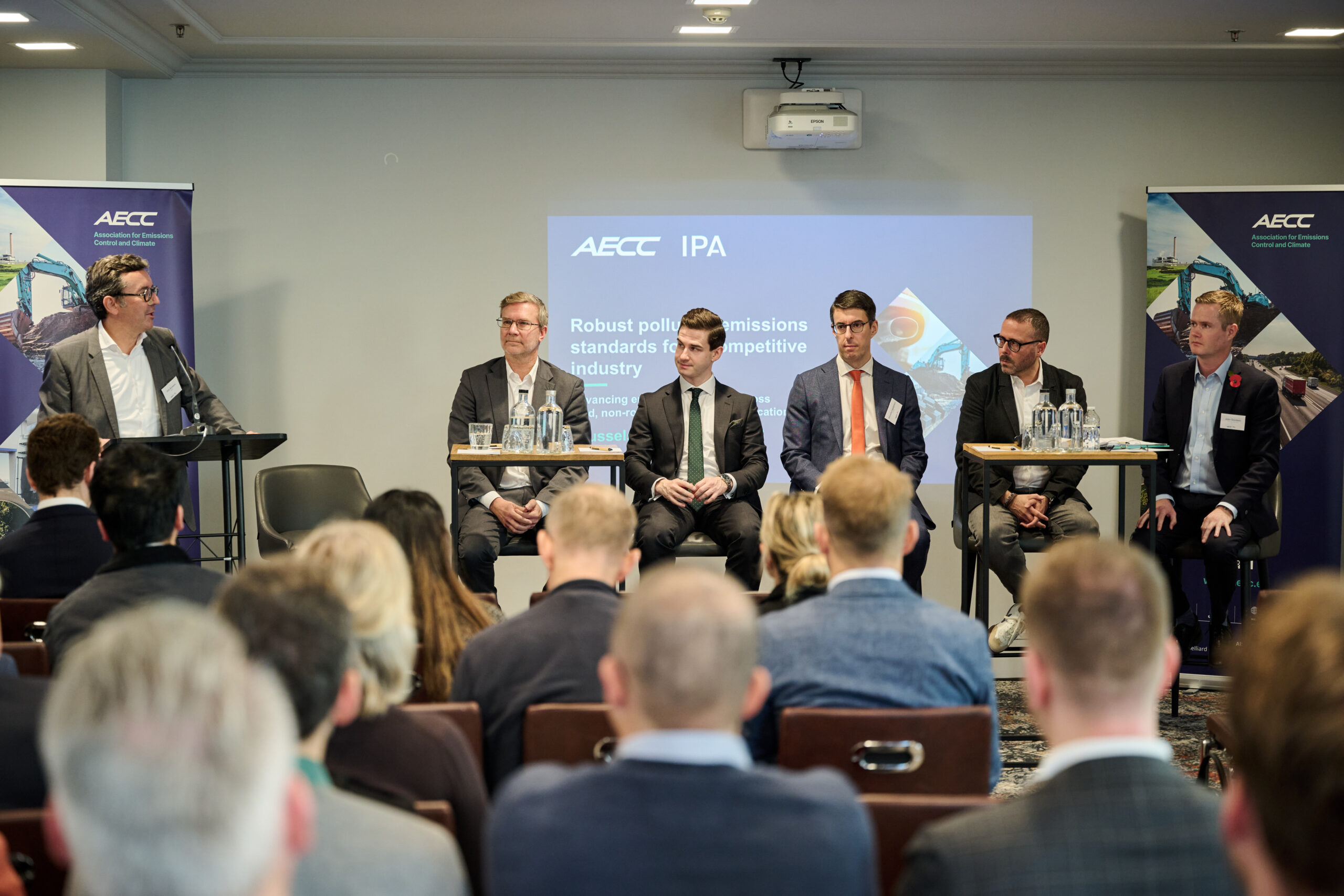
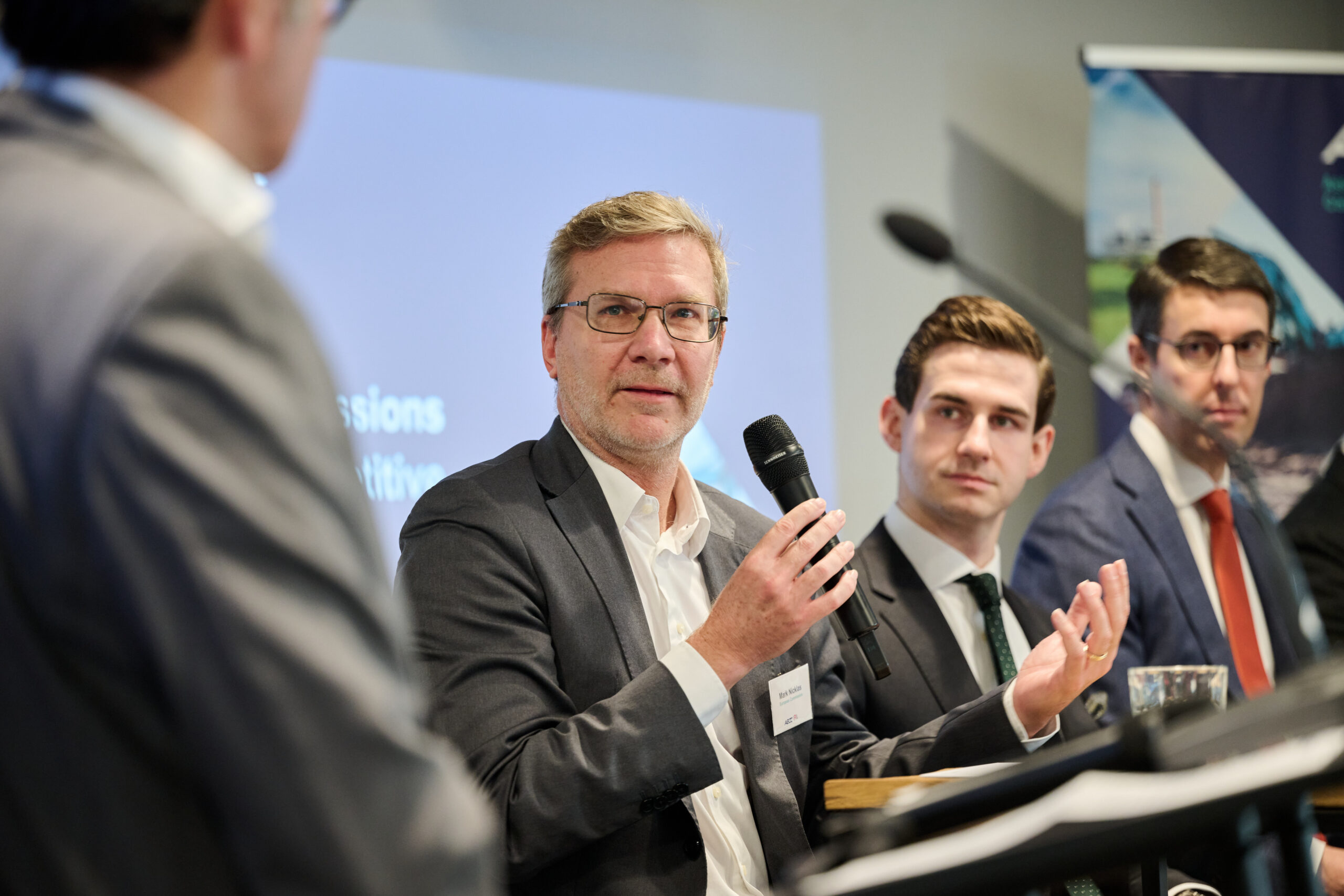
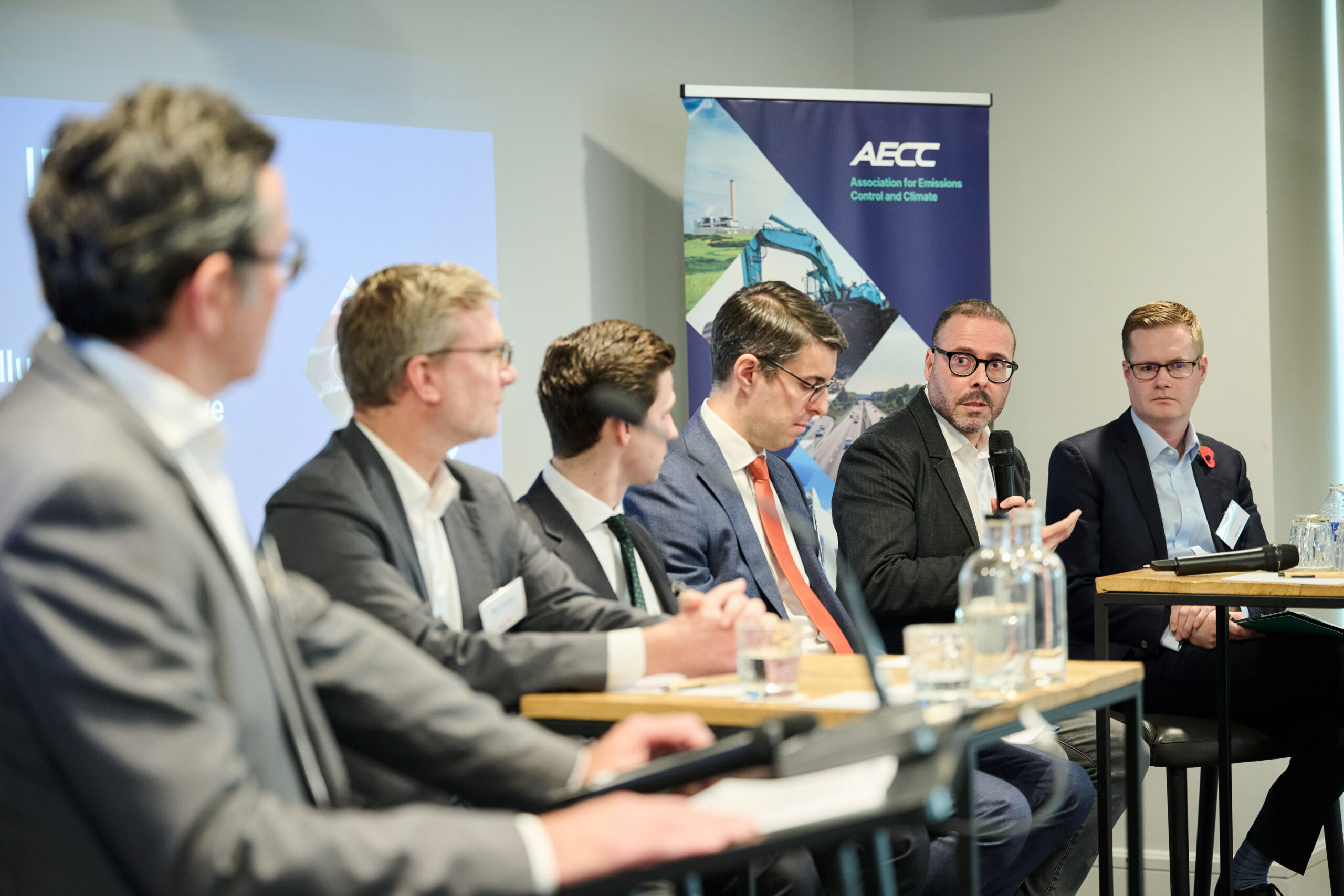
This was followed by a panel discussion moderated by Dirk Bosteels, on “How best-in-class emission control technologies can safeguard the EU’s long-term clean mobility goals”, bringing together Mark Nicklas (EC DG GROW), Eric Woydte (VDA), Vincent Legagneur (CLEPA), Pedro Gomes (POLIS), and John Goodwin. The debate started from the challenging context of competitiveness, resulting in job losses, but highlighted on the other hand the continued importance of road transport on urban air quality. There was general agreement on role for complementary technologies to electrification. Getting a VEEF was noted to be a necessary step to secure investment in renewable fuel. Also, the continued role of PHEVs was discussed. A reopening of Euro 7 for certain topics was reflected as well. Questions from the audience were around the existing fleet and the health effects of air pollution to citizens.
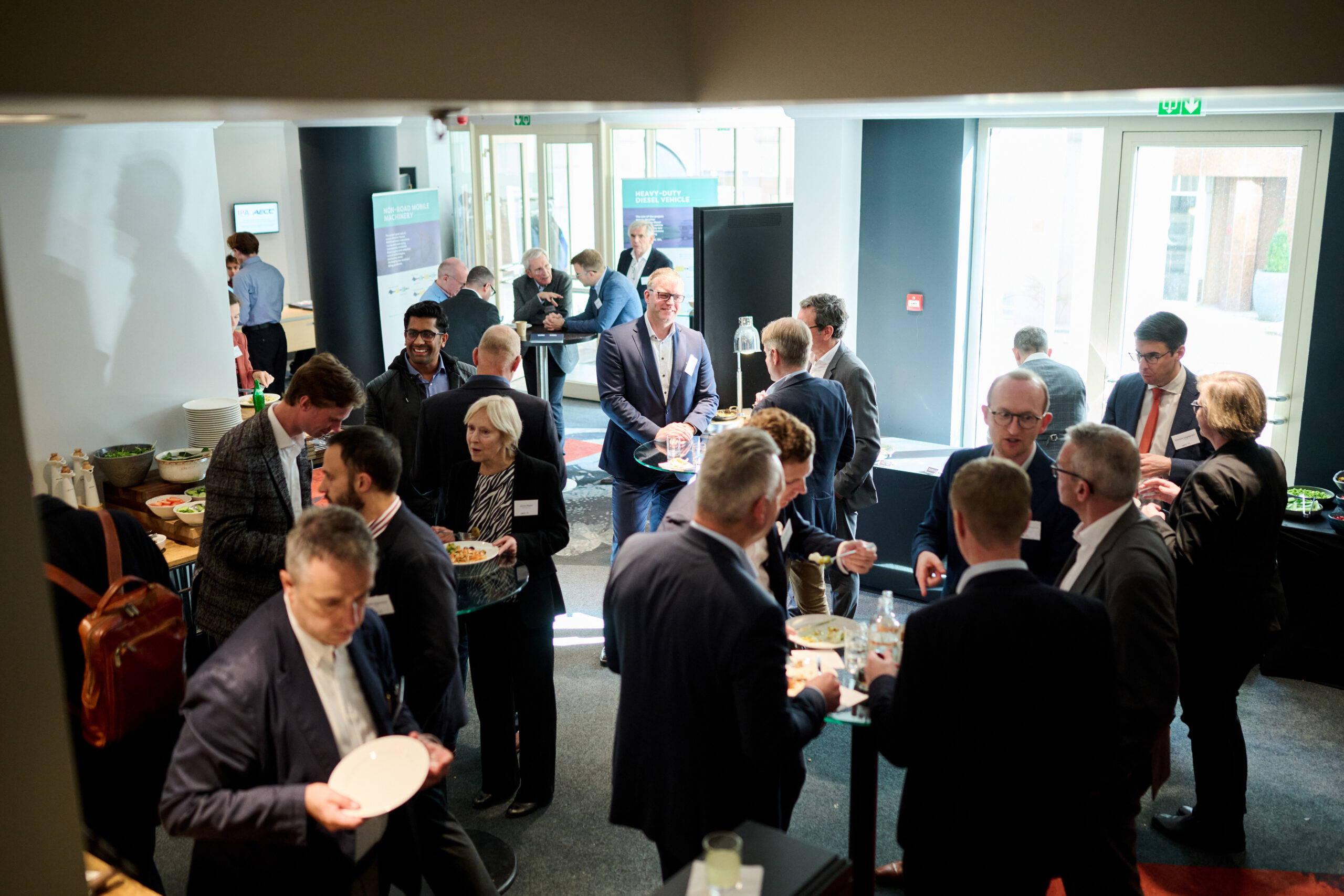
During the lunch break, participants were able to further exchange on the role of emission control technologies with key policy makers from the different institutions.
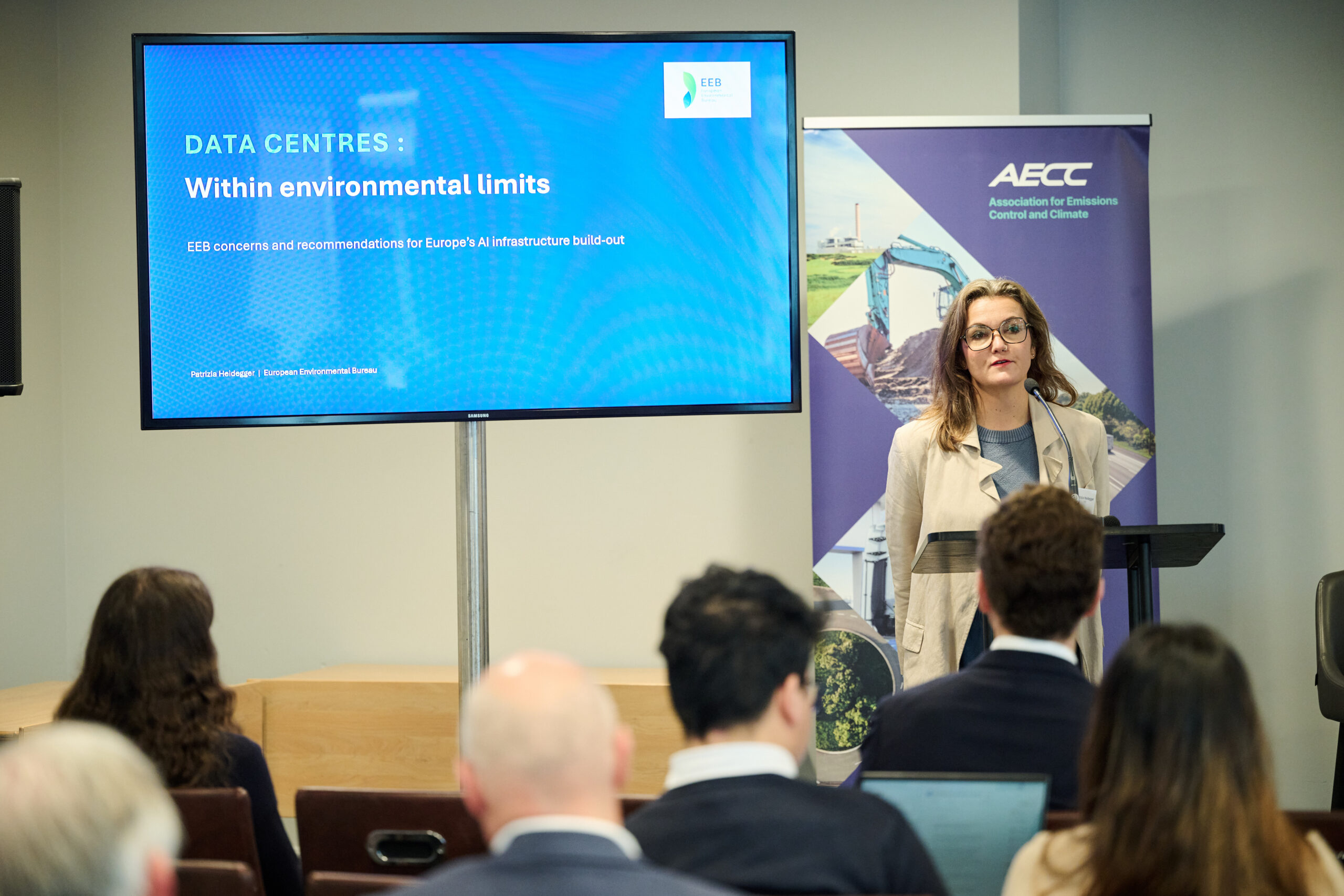
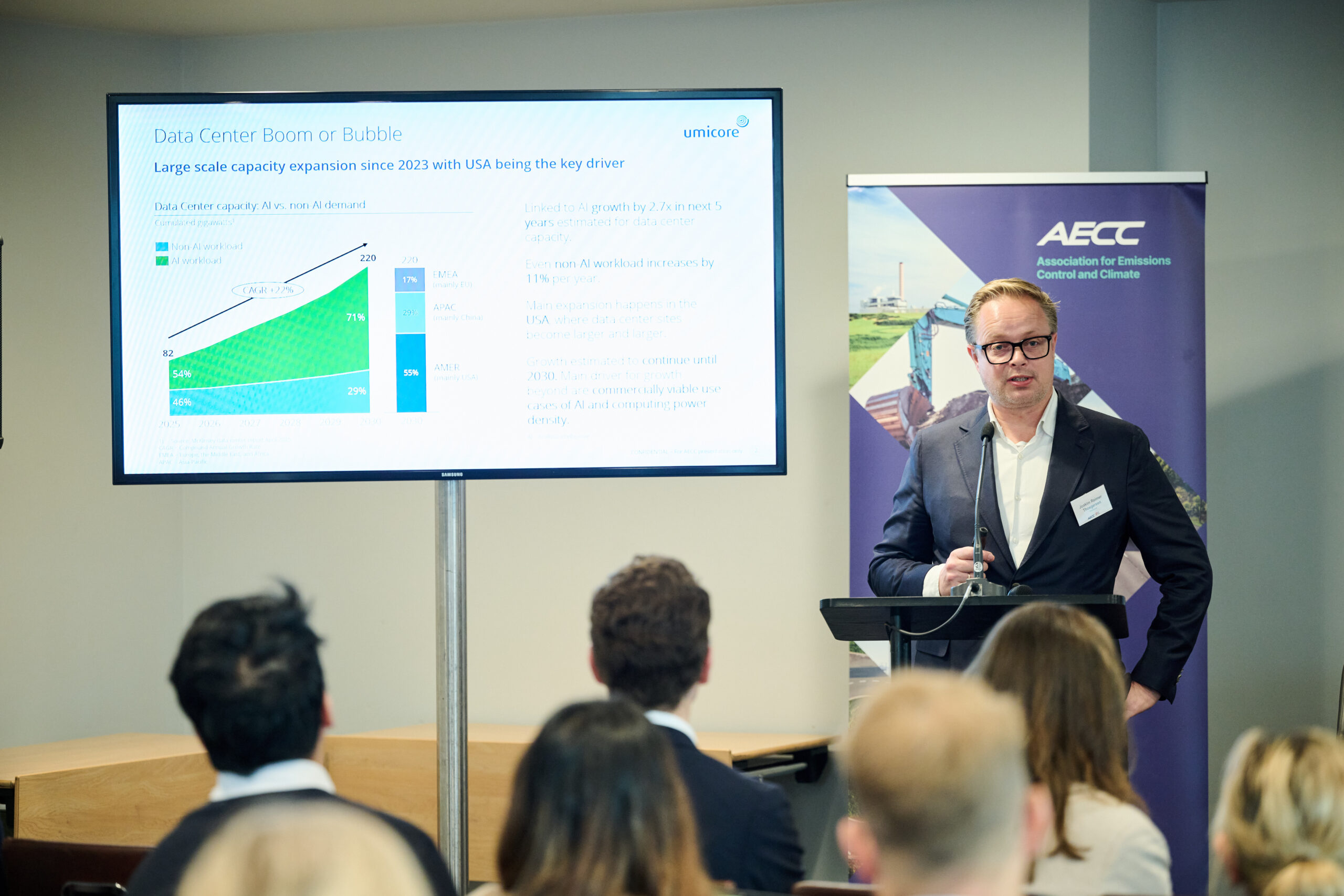
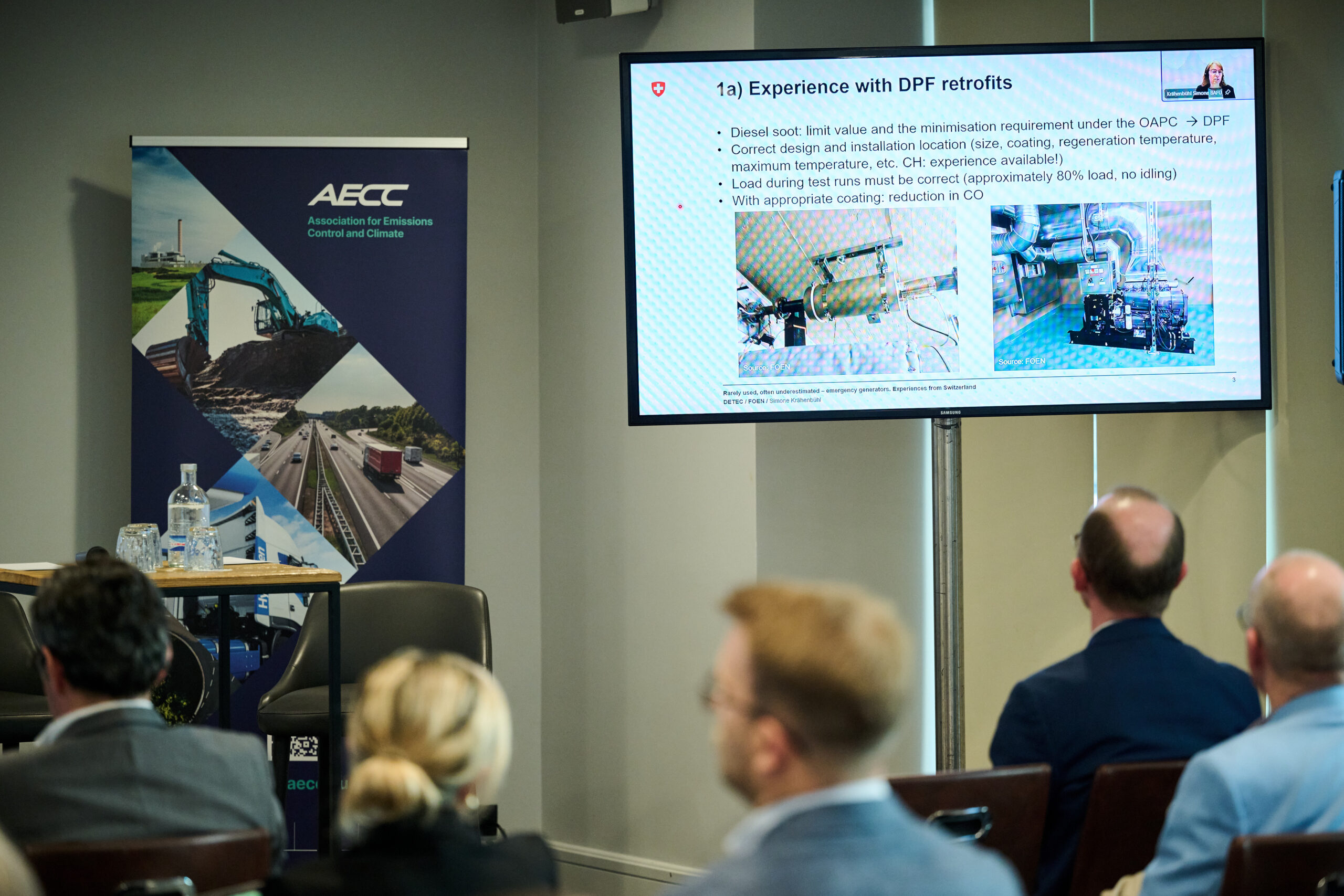
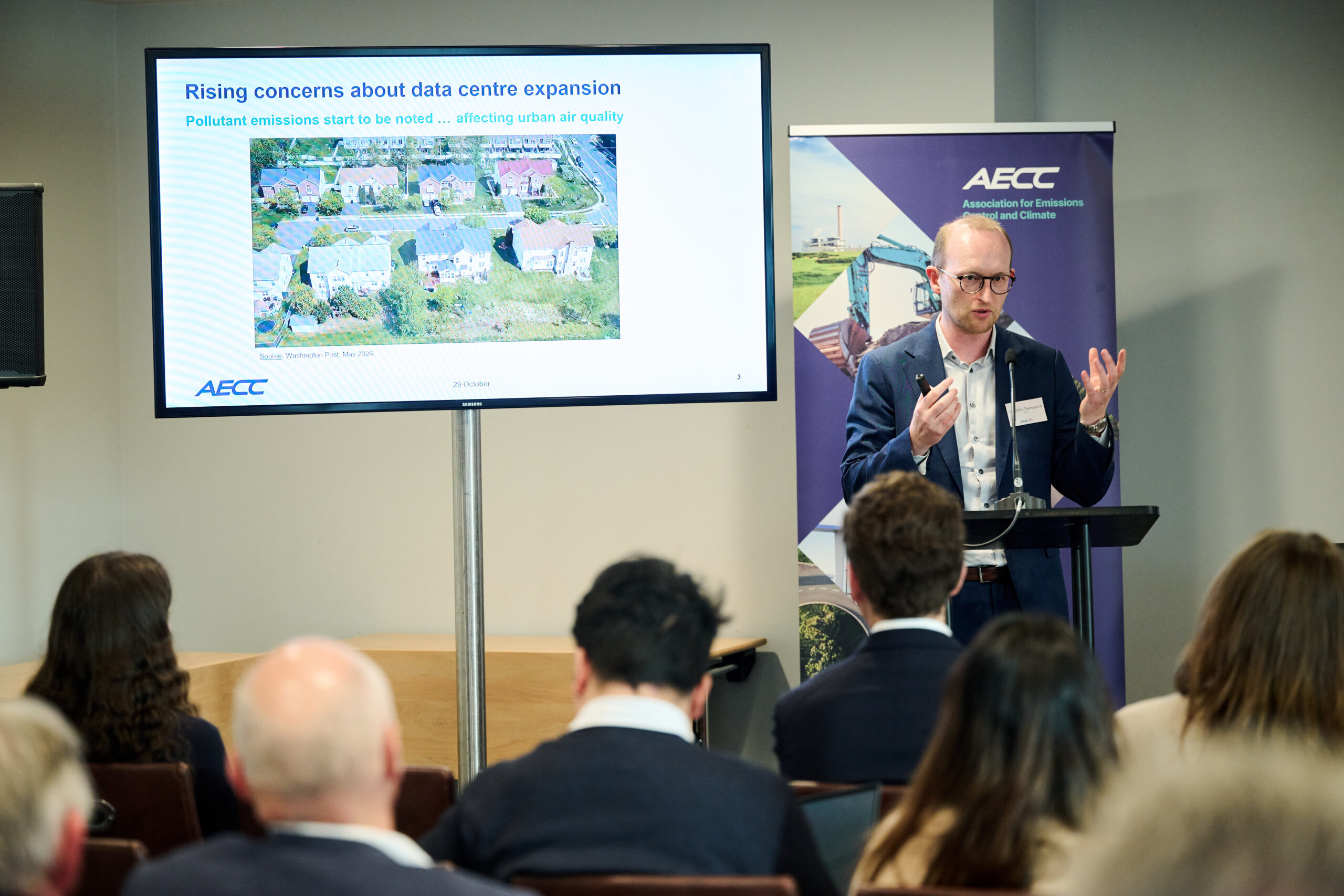
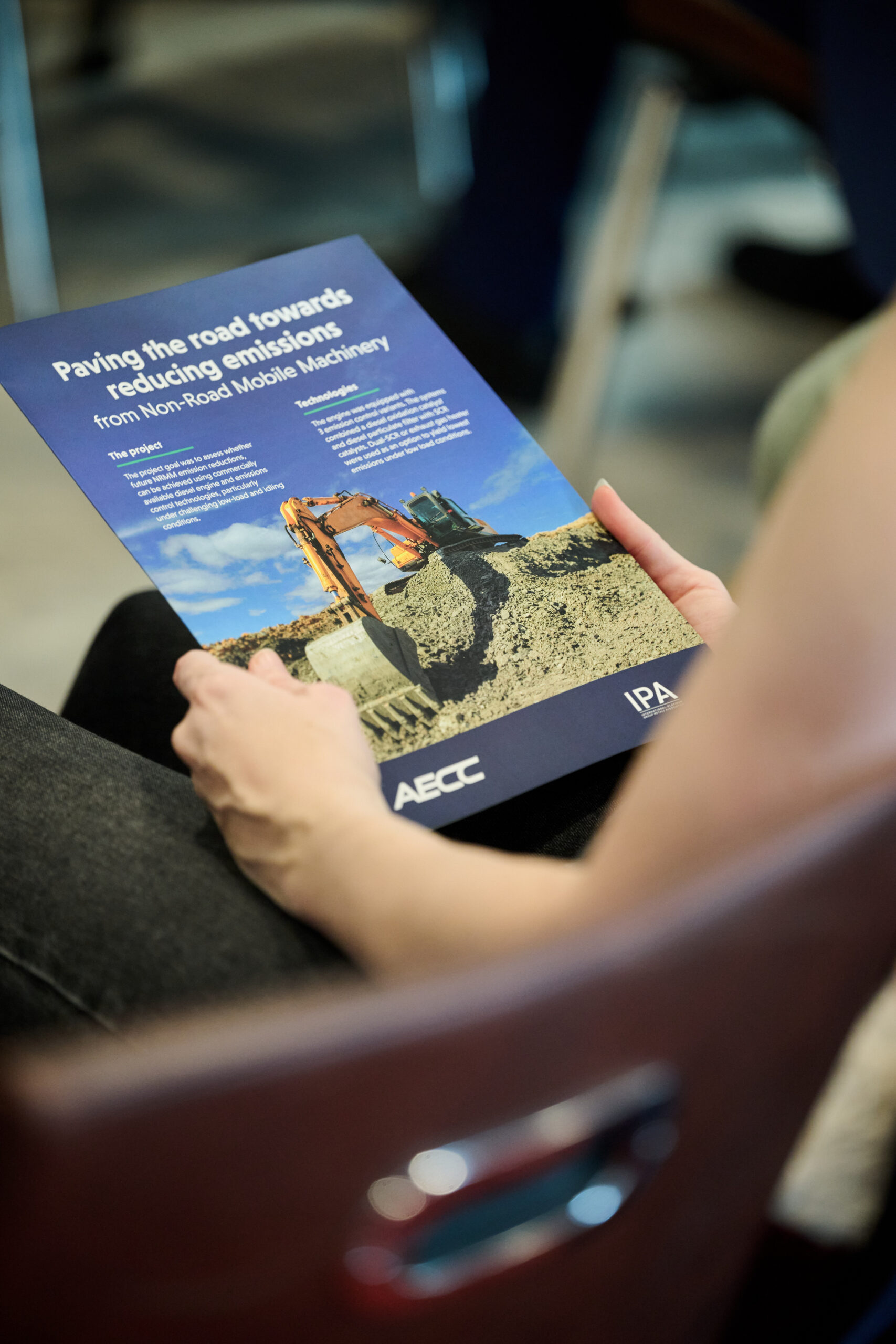
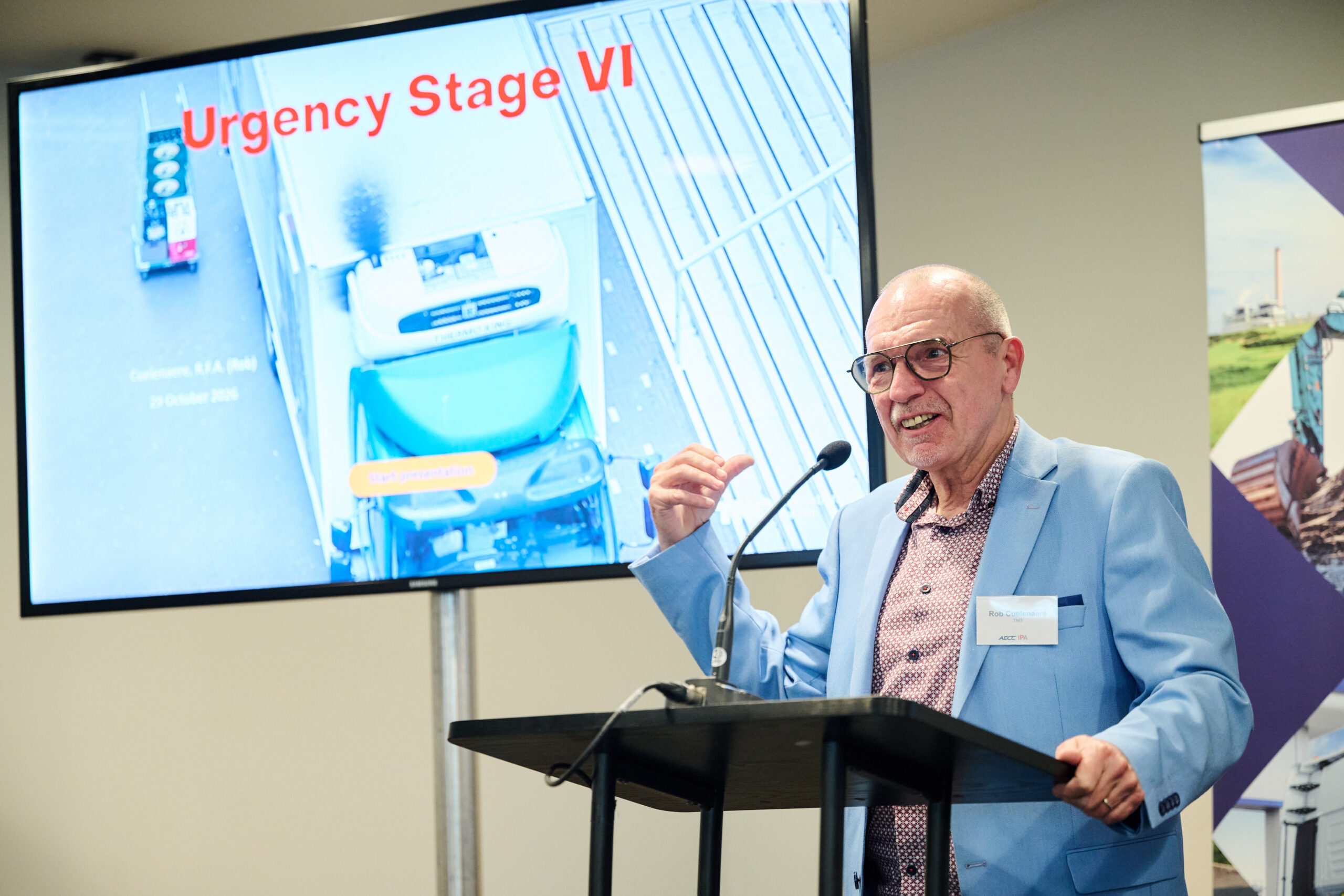
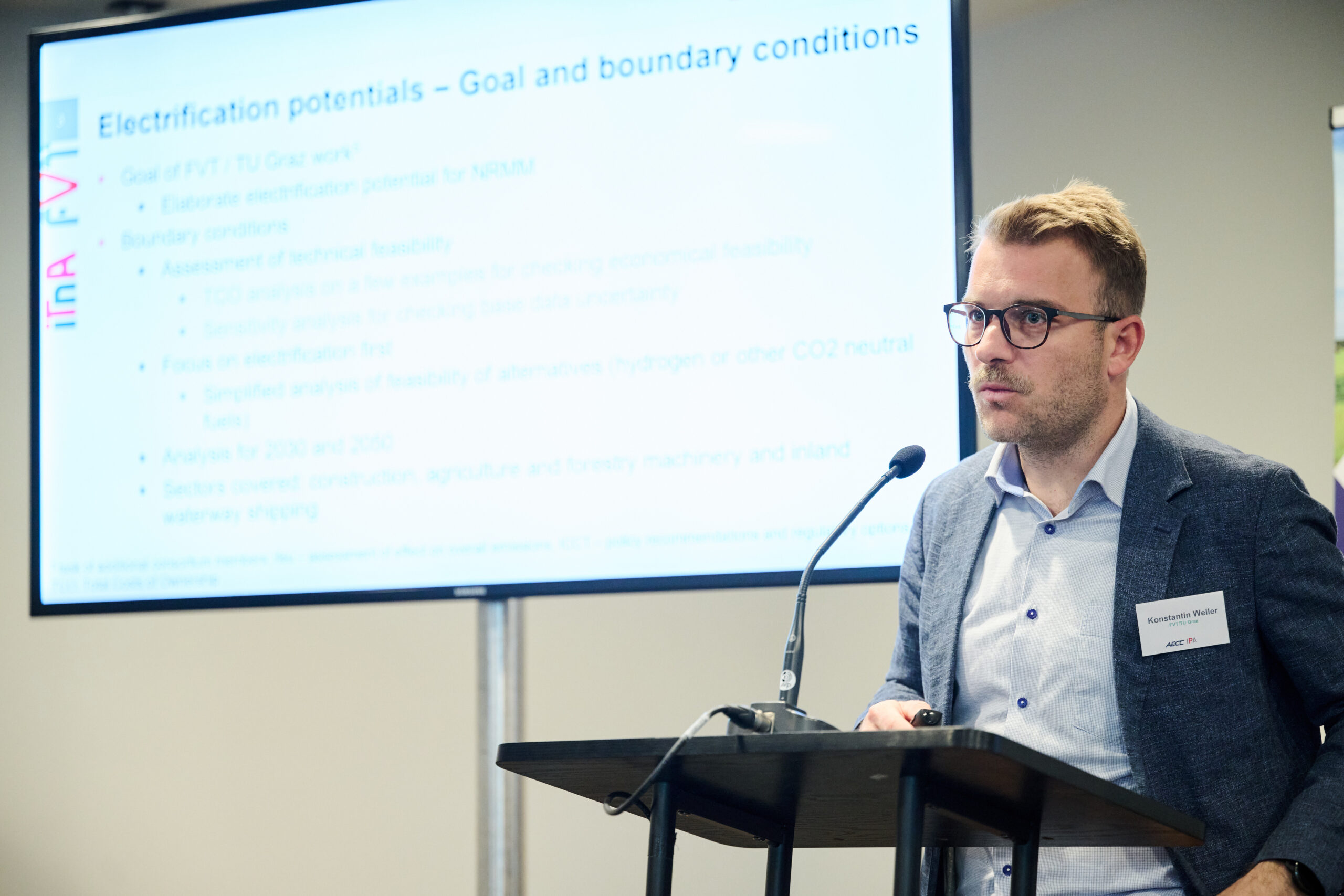
The afternoon session focused on the non-road and data centre journey, welcoming speakers from various backgrounds. It opened with Patrizia Heidegger (European Environmental Board) presenting the overall framework of data centres, and its impacts on various environmental aspects. Turning to data centre backup power, Joakim Thøgersen (Umicore) highlighted the availability of emission control technologies for this type of application. Simone Krähenbühl-Gammeter (Swiss Federal Office for the Environment) stressed the importance of data centre backup power on air quality, despite low amount of operating hours. Joachim Demuynck highlighted policy requests to tackle data centre back-up power and Non-Road Mobile Machinery (NRMM), noting emission control technologies are available to address the issues. On NRMM, Rob Cuelenaere (TNO) and Konstantin Weller (TU Graz) further illustrated regulatory gaps with real-world data of existing machines.
AECC would like to thank all speakers, moderators and attendees for their valuable contributions, which helped make the event a successful forum for constructive and forward-looking discussions.
The agenda of the policy event, some pictures, as well as the presentations can be found below:
Agenda
| 09:30h |
Registration & Welcome Coffee |
| 10:00h |
Welcome address
|
| 10:15h - 12:00h |
Session 1: The automotive transitionHow best-in-class emission control technologies can safeguard the EU’s long-term clean mobility goals
|
| 10:40h |
Technology neutrality considerations for transport decarbonisation and air quality
|
| 11:00h |
The automotive transition - Panel debate
|
| 12:00h - 13:30h |
Networking lunch |
| 13:30h - 15h30 |
Session 2: The Non-Road and data centre journeyHow ambitious emissions standards and regulatory certainty can contribute to cleaner air, while supporting the EU’s industrial and digital transitions |
| 13:35h |
Data centres: Within environmental limits
|
| 13:50h |
Emission Control for Data Centers
|
| 14:05h |
Rarely used, often underestimated – emergency generators. Experiences from Switzerland
|
| 14:30h |
Stationary & NRMM legislation
|
| 14:45h |
Urgency Stage VI
|
| 15:00h |
Electrification potentials and real-world emissions
|
| 15:30h - 16:30h |
Networking cocktail |
- Related Pictures